Fashions come
and go, but in Victorian times one item of apparel that was considered ‘de rigeur’
by women of all classes was the corset. So much so that even women in prison or
the workhouse, were supplied with corsets.
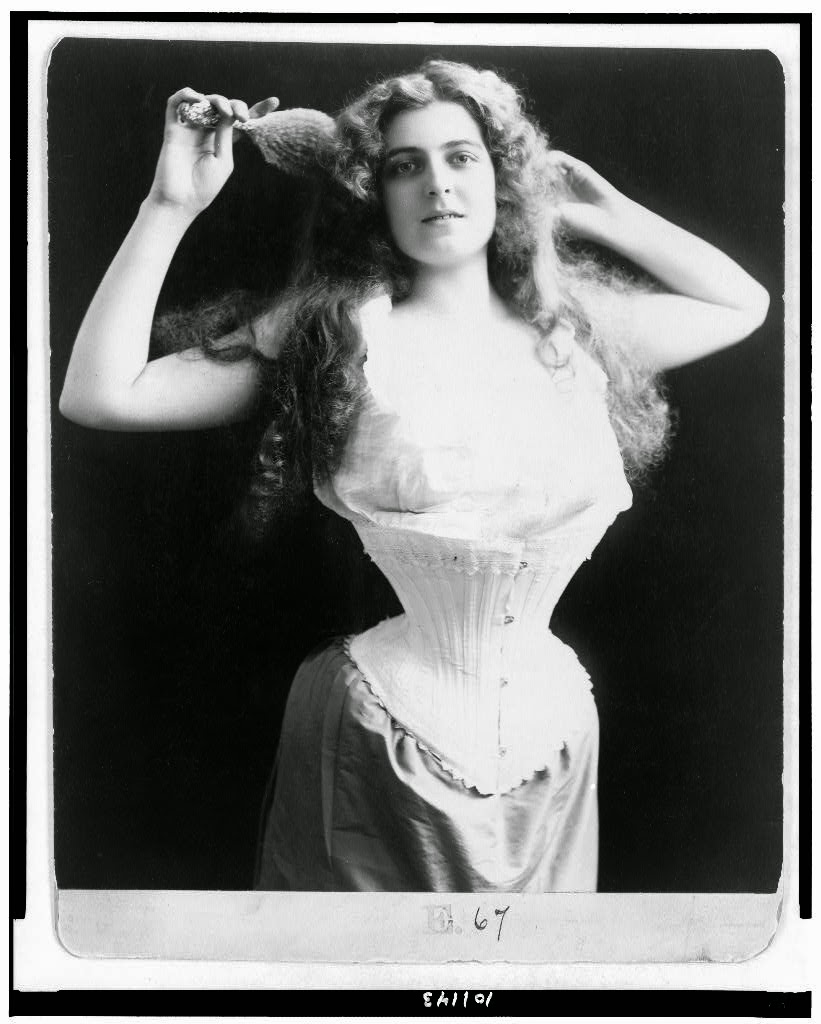
Part of the
reason was that 19th century medicine held that women’s internal
organs needed support. It was said that a woman’s midriff was weak and not up
to the job of supporting her womb. Ironically, this was a self-fulfilling
prophecy because the constant use of corsets weakened the abdominal muscles.
Waisting Away
Any muscle
when not used, tends to waste away (waist away? See what I did there!) and the
abdominal muscles are no different. Instead of having the female version of a
six-pack, the Victorian lady had muscles equivalent in tone to a blancmange –
thanks to the corset.
Indeed, if a
Victorian lady left off her corset, she was likely to quickly feel vulnerable
and tired, thanks to the lack of support – and hence confirming the reason for
wearing one.
“Women who wear very tight stays
complain that they cannot sit upright without them, nay are compelled to wear
night stays in bed.” Female Beauty – Victorian periodical
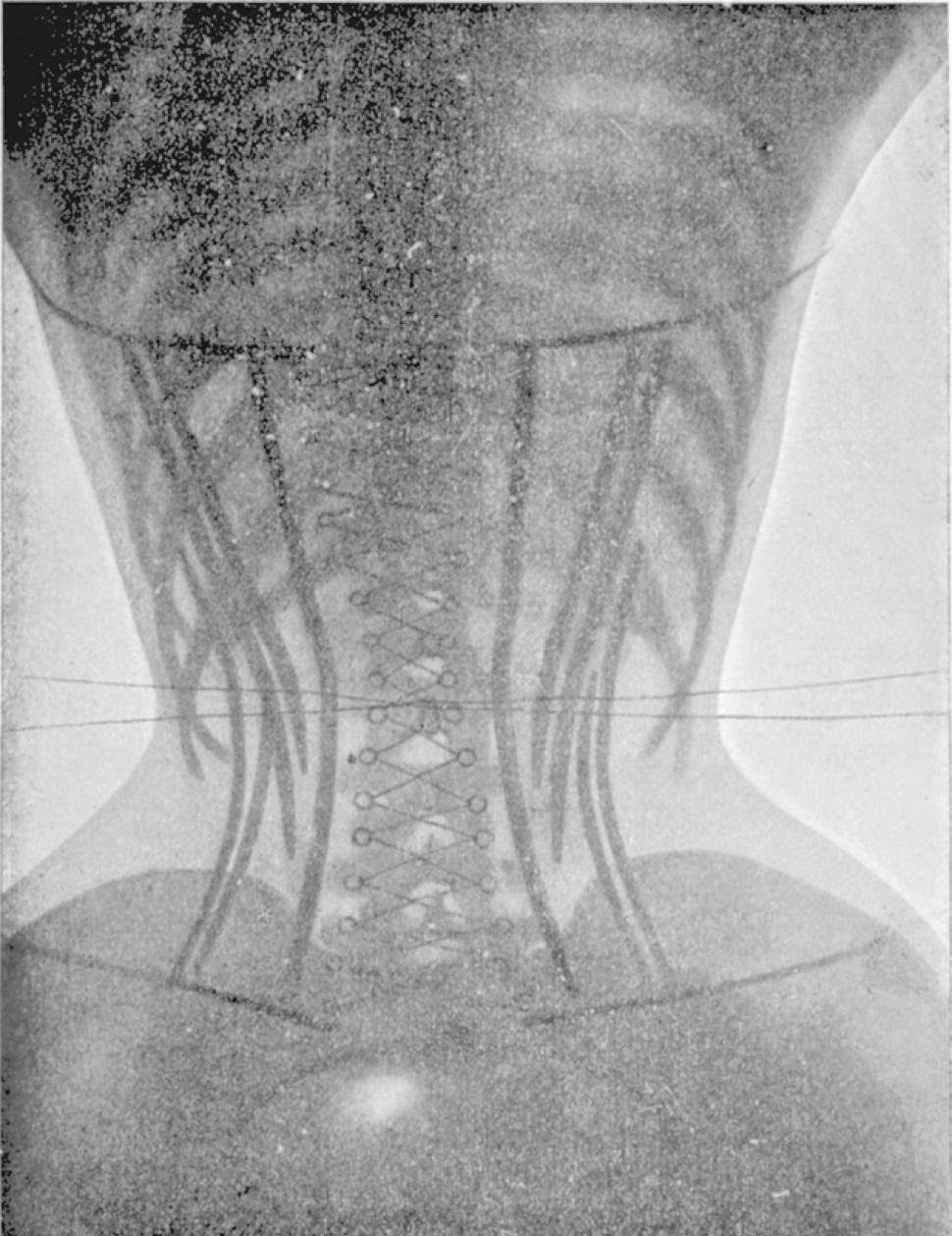 |
| A x-ray from 1908 showing how a corset compressed the lower ribcage |
Upright Posture
Thus the
corset also braced the back and helped a lady to have an elegant upright
posture and bearing – something much admired at the time.
Warmth and Protection
A corset was
said to protect the delicate organs such as the kidneys. The garment kept in the
body’s warmth and hence saved the kidneys from catching a chill. Indeed, the
corset provided a valuable windproof weather, against the vagaries of the
British climate.
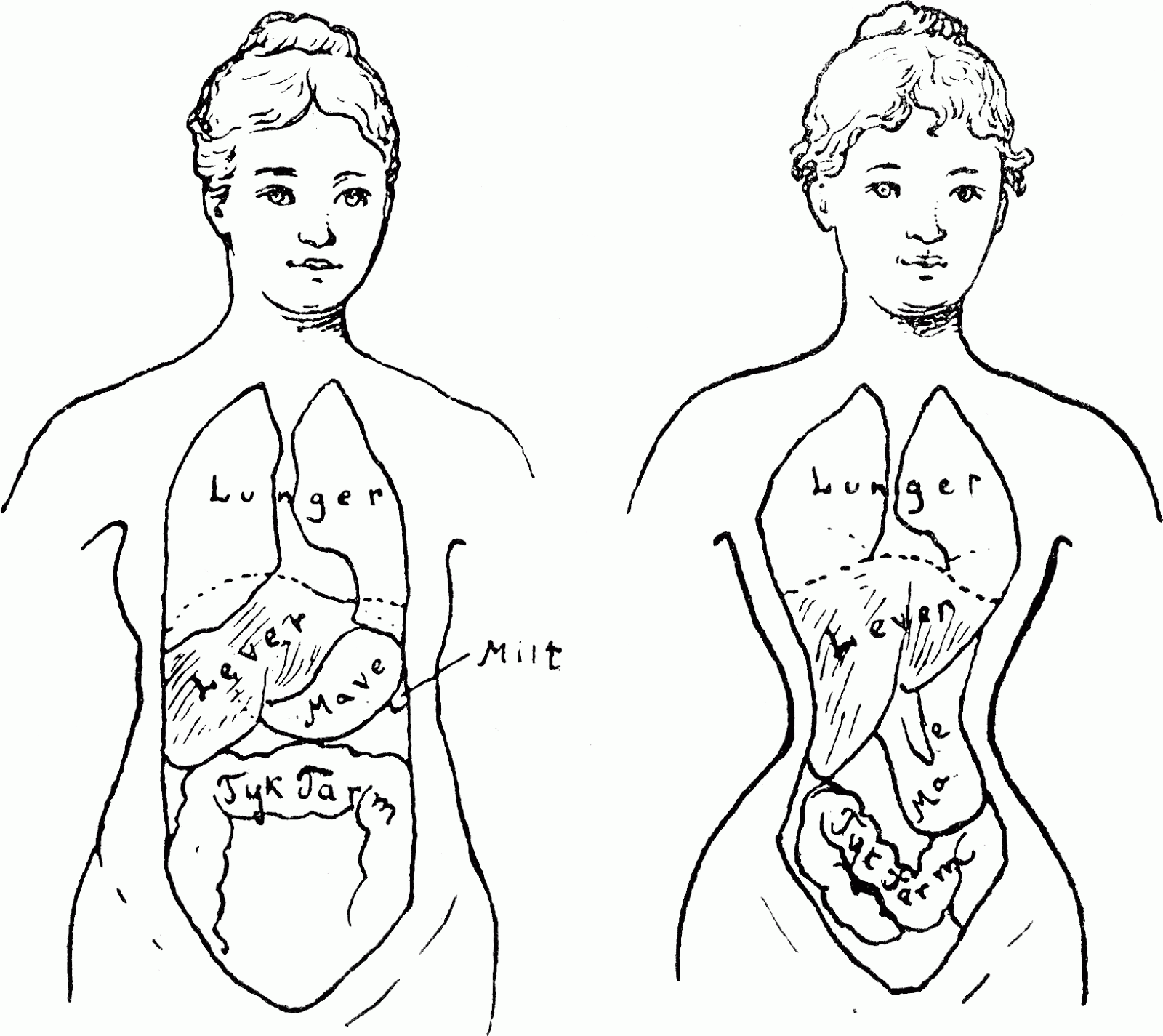 |
| Normal anatomy on the left Corset restricted anatomy on the right |
The Corset Not to Blame
So how come
the corset has such a bad reputation as an instrument of subduing women and
stopping them from leading active lives?
Mainstream
medical thinking was that corsets were good, but could be made bad when laced too
tightly. Unfortunately, the latter is exactly what happened because society
admired a trim figure with a tiny waist – which meant women used every tool at
their disposal to obtain just that.
It was the
1850s and 60s that saw tremendous pressure building to produce a tiny waist. Not
only that, but it was positively encouraged, especially for young women with a
husband to snare.
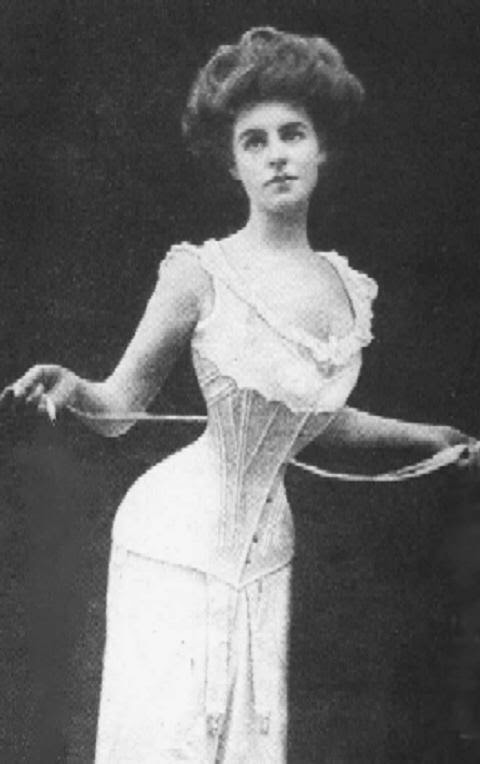
A Smaller Waist than a Toddler
“When I left
school at 17 my waist measured only 13 inches, it formerly having been 23
inches in circumference.”
This was
because fashionable schools actively worked on reducing the waists of their
female charges. This was done by equipping the girls with a series of ever-smaller
corsets. Of course being so tightly laced they could not eat large meals, and
were forced to peck at food like a bird. Indeed, the corset was only removed
for one hour per week for the girl to have a wash.
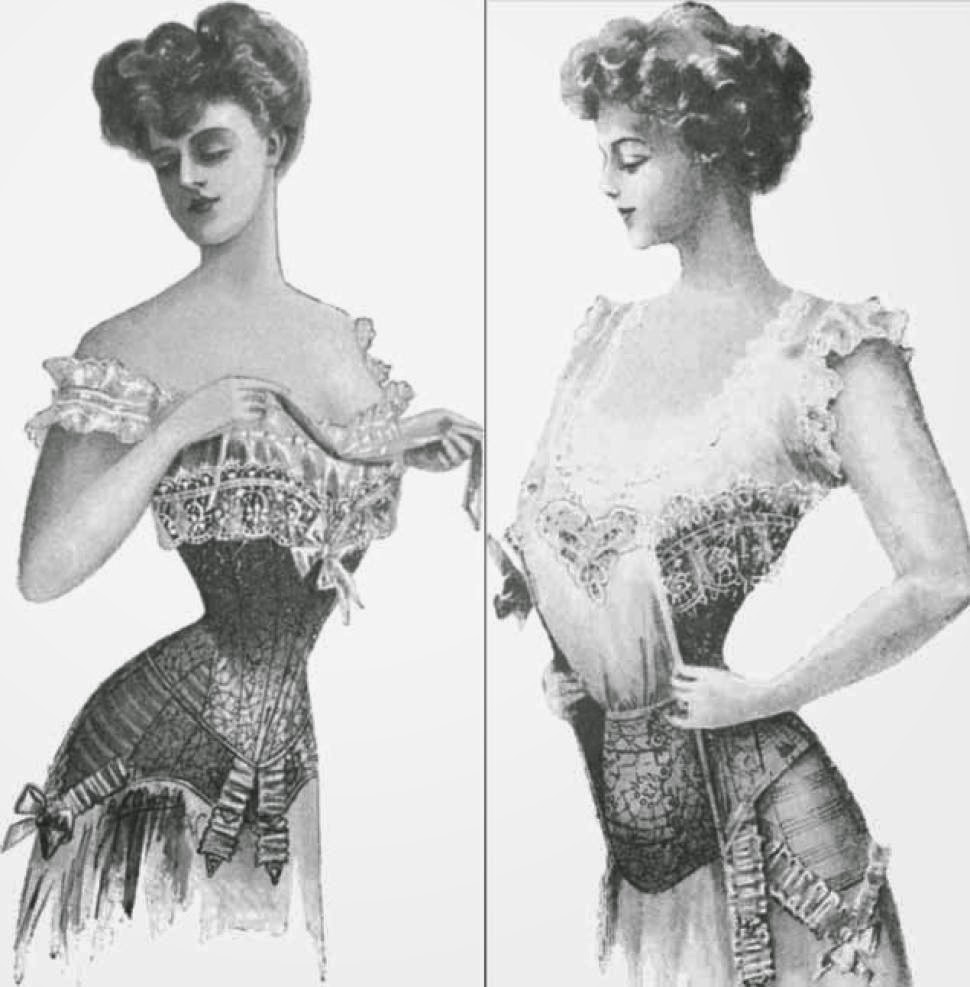
Contemporary Concerns
And finally…at
the time people had concerns about the damage done by over-tight lacing, but
the problem was no one could agree on how tight was too-tight. And remember
that in addition, there was a cultural perception that an uncorseted woman was
one of low morals – and you begin to see the mountain that had to be climbed to
find a women’s undergarment that was both flattering and healthy.